
Solar carports for schools, cities, and public agencies
Public lots are large, sunny, and owned for decades, which is why libraries, utilities, transit facilities, and school districts build solar canopies. What agencies gain, how approvals differ, and what the LADWP and LADOT reference installations show.
5 min read · Updated October 6, 2026
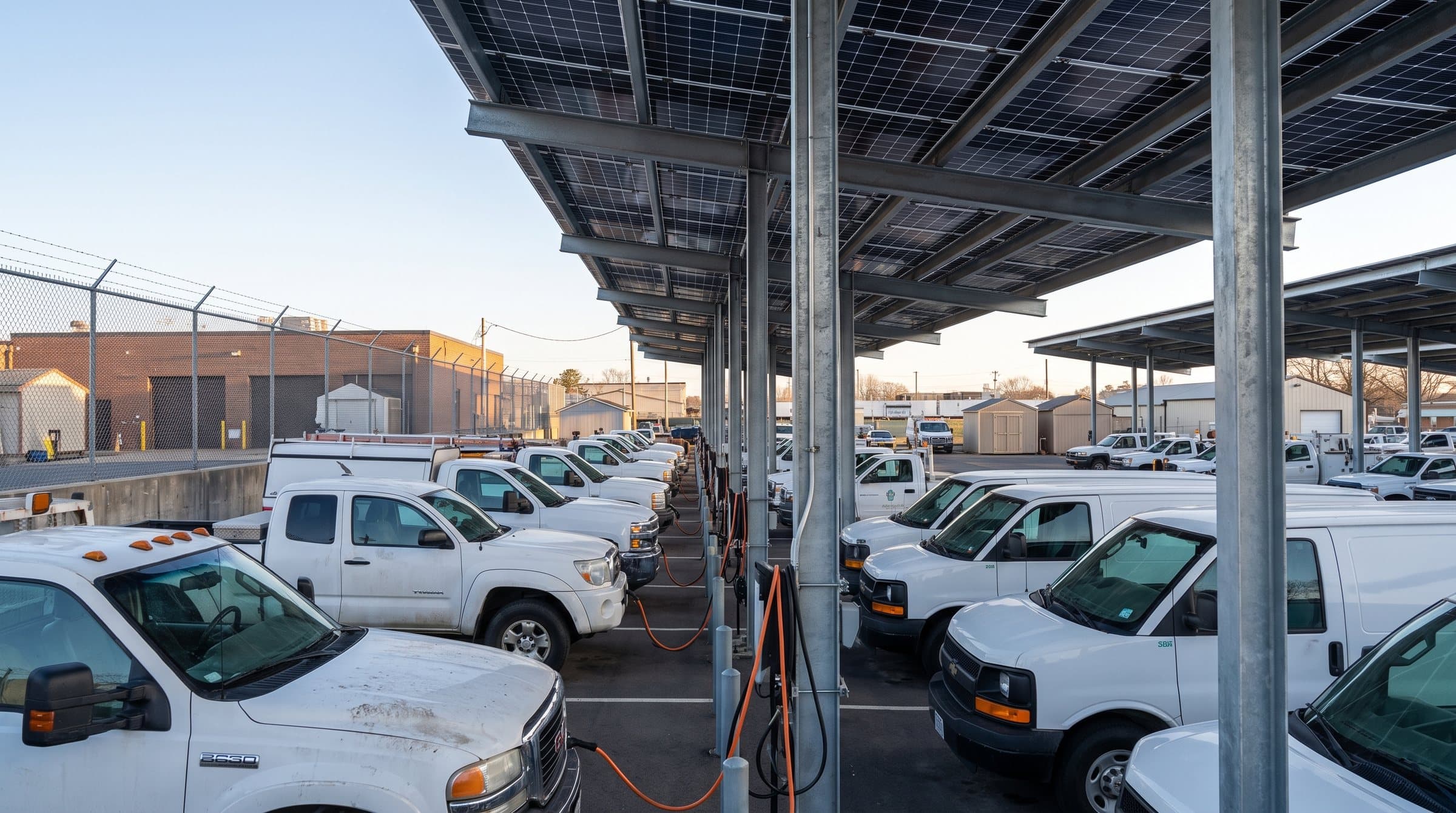
Public agencies own some of the largest surface lots in any city, hold them for decades, pay the utility bill out of an operating budget, and are expected to lead on resilience and emissions. That is why the reference installations for the canopy systems we deliver include a water and power utility, a transit maintenance facility, and a public library.
What agencies gain
- Operating savings that recur for the life of the structure, on facilities that run every day.
- Resilience. Paired with storage, a canopy keeps critical loads and fleet charging running through grid disturbances, which is why utilities and transit agencies have been early adopters.
- Fleet electrification infrastructure. Agencies converting fleets to electric need charging where vehicles park overnight; a canopy carries the chargers and offsets the load.
- Shade for the public at libraries, community centers, parks, and schools, which is itself a health and comfort improvement in a warming climate.
Reference installations
The LADWP Energy Center in the North San Fernando Valley received a 262.5 kW solar carport system from our manufacturing partner, projected to generate about 403 MWh per year, delivered as design, fabrication, installation, and crew training. The LADOT Central Bus Facility in downtown Los Angeles, a LEED Gold maintenance and fueling facility for the DASH downtown fleet, received 377.6 kW of solar carports, projected at about 584 MWh per year, delivered with the Sinanian Group. The Dixon Public Library in Northern California received solar canopies over its public parking.
How approvals differ
Public projects follow procurement rules, prevailing wage, and often a separate plan review path. School and community college projects in California are reviewed by the Division of the State Architect rather than the local building department, which adds structural review time and requires DSA-experienced engineering. Agencies often have their own design standards for lighting, accessibility, and site security that the canopy must meet. None of these is unusual for a canopy project, but they need to be in the schedule from the start.
Funding
Public agencies cannot use tax credits directly, but the federal law allows elective pay, under which tax-exempt entities receive the value of the investment tax credit as a direct payment, subject to the same construction and placed-in-service deadlines that apply to taxable owners. State and regional grant programs, utility programs for fleet charging, and energy service agreements where a third party owns the system and sells the power to the agency are the other common routes. We prepare the funding summary alongside the site evaluation so the agency can choose a path early.
Questions
- Can a school district use the federal tax credit?
- Through elective pay, a tax-exempt entity can receive the value of the credit as a direct payment, subject to the current construction and placed-in-service deadlines. Confirm with the district's counsel and financial advisor.
- Do school canopies need DSA approval?
- Yes. K-12 and community college construction in California is reviewed by the Division of the State Architect, including canopies. We engineer to DSA requirements for those projects.
- Can the canopy support fleet charging for buses?
- Yes. Clearance up to 15 feet accommodates transit vehicles, and the structure can carry overhead or pedestal charging equipment with the appropriate electrical design.
Sources
- California Division of the State Architect
- IRS: Elective pay and transferability
- IRS: Clean Electricity Investment Credit (Section 48E)
Checked against these sources on the date shown above. Codes, incentives, and program terms change; confirm before relying on them.