
03Charging-station engineering
Anyone who wants to build a charging station needs someone who knows power.
Electrical and civil engineering for EV charging sites, through Electric Highway, an electrical engineering firm and electrical contractor licensed across more than forty states. Design only, or design-build when you want one team to carry it to energization.
Scope
From the utility meter to the charging port.
Feasibility and incentives
Front-end feasibility and financial analysis, demand confirmation, and the local, state, and federal funding and grant applications that offset the cost, prepared before the design is fixed.
Load studies and utility coordination
Existing service evaluation, demand forecasting, and the service-upgrade or new-service application with the utility.
Stamped drawings
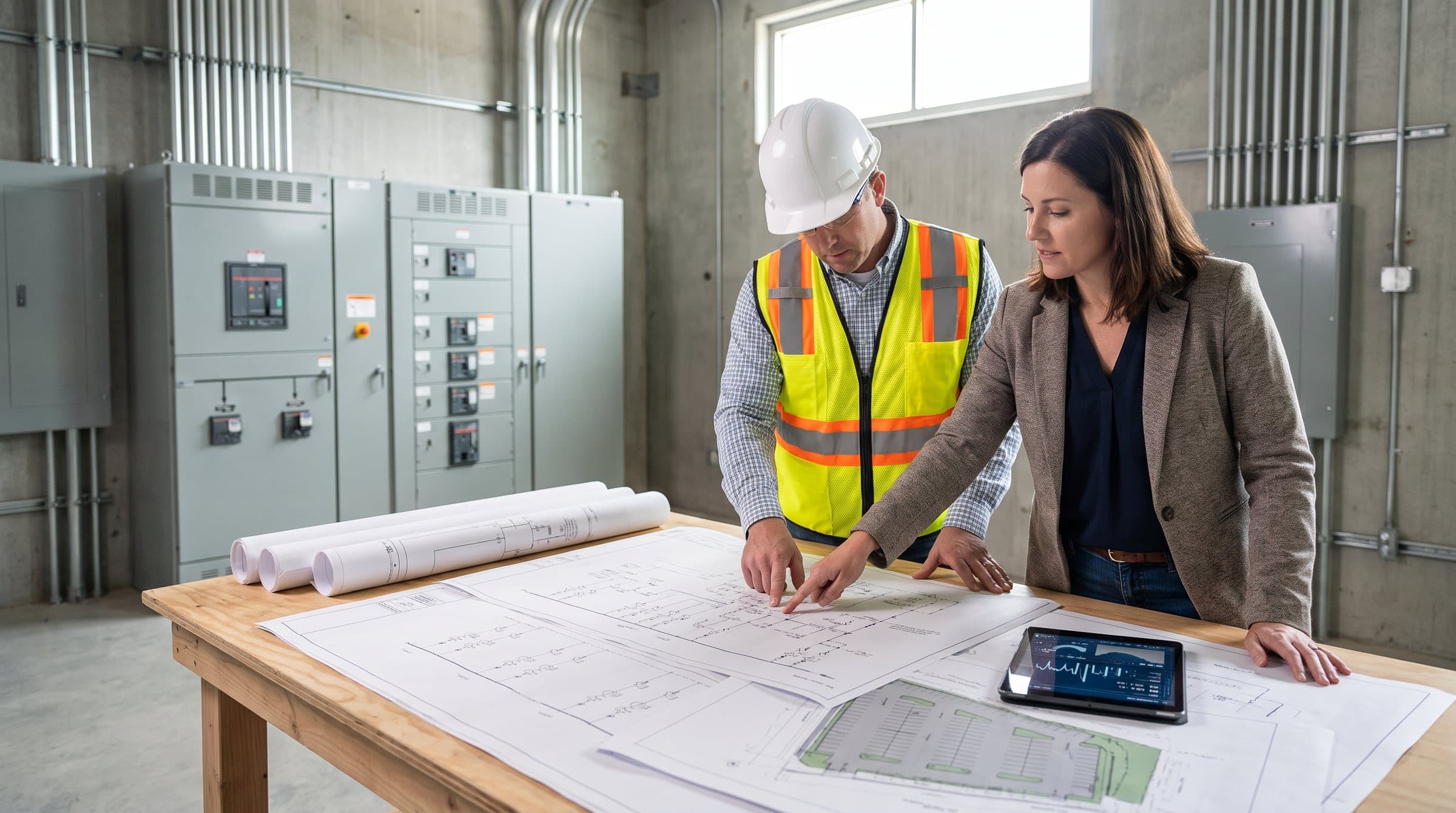
Electrical single-lines, panel schedules, site plans, trenching and conduit routing, ADA stall compliance, and the structural package when a canopy is involved.
Permit and AHJ response
Plan-check comments answered by the engineer of record, with the local jurisdiction's amendments to the California Electrical Code applied from the first submittal.
Design-build
When the owner prefers one contract, GreenSource builds what the engineers design: trenching, switchgear, chargers, canopy, and commissioning.
Network, monitoring, and maintenance
Open-protocol OCPP network activation with driver payment, 24/7 monitoring and help desk from a California network operations center, and ongoing maintenance of everything from Level 2 units to high-power DC fast chargers and bus pantographs.
Engineering is performed by Electric Highway (electrichwy.com), an electrical engineering firm and electrical contractor headquartered at 2750 Garfield Avenue, Commerce, California, with satellite offices in the Four Corners states, the Carolinas, Hawaii, Montana, Florida, Connecticut, and Alberta. The firm is brand-agnostic on charging equipment, holds warranty and maintenance contracts with the major charger manufacturers, and its senior team reports more than 180 years of combined utility-grade electrical experience. Representative projects will be added as the partnership is documented.
Deliverables
What the engineering package includes, phase by phase.
Every phase ends in documents the owner keeps: the load study, the permit set, the utility application, and as-builts at the end.
| Phase | What you receive |
|---|---|
| Feasibility | Existing service and panel survey, a load study or 12-month demand review, a preliminary charger layout, and the utility path: existing capacity, an upgrade, or a new service |
| Design | Electrical single-line diagram, load calculations, panel schedules, site plan, conduit and trench routing, grounding, accessible stall layout, and lighting where needed |
| Utility | Service or upgrade application, load letter, transformer and pad coordination, and easement exhibits when the utility asks for them |
| Permit | A stamped permit set, plan-check responses from the engineer of record, and fire department coordination where battery storage is involved |
| Construction support | Submittal review, RFIs, field observation, as-built drawings, and commissioning support |
| Network and operations | OCPP network activation, pay-as-you-go driver payment through a mobile app, 24/7 health monitoring and help desk, and a preventive maintenance plan for the life of the station |
Power classes
The charger class sets the size of the utility project.
Level 2 usually fits the service a property already has. DC fast charging usually does not, which is why the utility conversation starts at feasibility, not after design.
| Charging class | Power per port | Typical effect on the service |
|---|---|---|
| Level 2 | 7 to 19 kW, 208 or 240 V AC | Often fits the existing service with load management |
| DC fast | 50 to 350 kW and up | Usually a service upgrade or a new transformer |
| Battery-buffered DC fast | High power at the port, lower draw from the grid | Fits sites where the utility service is constrained |
| Fleet depot | A mix of Level 2 and DC fast at megawatt scale | New service, phased build-out, often with storage |
| Transit: depot and en-route | 150 to 600 kW pantograph charging for buses; 125 to 250 kW inductive pads where overhead gear is not wanted | Utility-scale service, active charging and energy management, grid studies with the utility |
Design-build
One contract from drawings to energization.
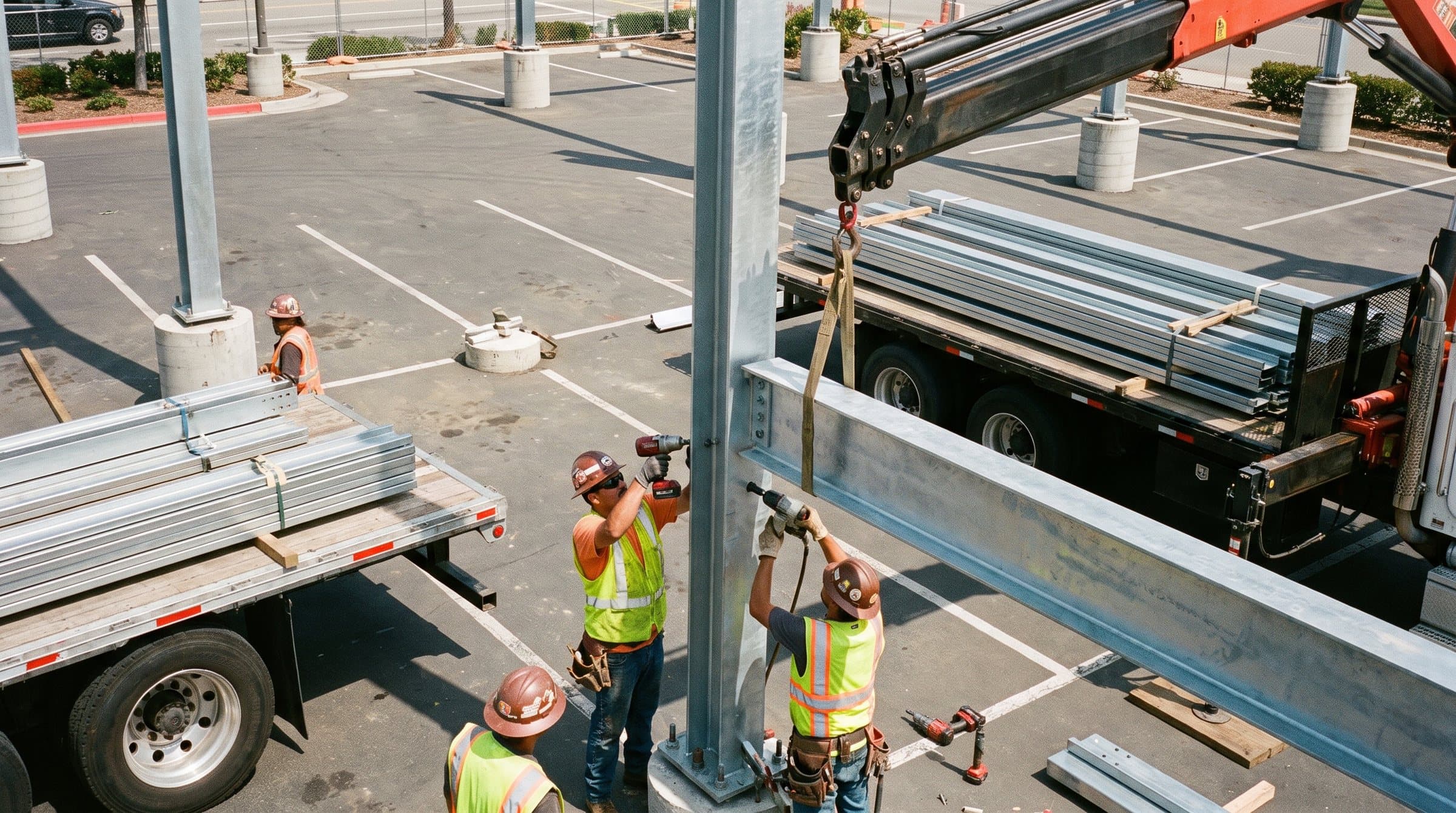
When the owner wants a single point of accountability, GreenSource builds what the engineers design: trenching and conduit, switchgear and panels, the chargers, the canopy if there is one, and commissioning with the utility.
Questions
What owners and developers ask the engineers.
Fast-charging site? Tesla Supercharger for Business and Supercharger hosting walk through the utility side.
What is a load study, and do we need one?
It establishes how much of the existing service is already in use. California's Electrical Code (Section 220.87) lets the engineer use the highest 15-minute demand from 12 months of utility data, or a recording of at least 30 days when a year of data is not available. Most multi-port projects start with one.
Do we need engineered drawings for a Level 2 installation?
Small installations on an existing panel are often permitted with a contractor's plan. Multi-port sites, service upgrades, DC fast charging, public sites, and anything that needs a utility application usually call for engineered drawings, and many jurisdictions require them for plan check.
How does load management change the design?
California's Electrical Code (Section 625.42) lets an automatic load management system set the maximum load used to size the service and feeders. That often turns a project that looked like it needed a new service into one that fits the existing service.
Can you design for chargers we add later?
Yes, and it is the cheapest time to do it. We size conduit, pull boxes, switchgear space, and transformer pads for the build-out you expect, so later phases add chargers without trenching the lot again.
Who is the engineer of record?
A licensed professional engineer at Electric Highway, our engineering partner, stamps the drawings and answers plan-check comments. GreenSource manages the design schedule and, on design-build projects, builds what is designed.
Do you engineer projects outside California?
Electric Highway is licensed as an electrical engineering firm and electrical contractor across more than forty states, with offices in the Four Corners states, the Carolinas, Hawaii, Montana, Florida, and Connecticut, so design and engineering travel. GreenSource builds in California.
Can you handle fleet depots and transit yards?
Yes. The partner team delivers full engineering, procurement, and construction for depots of any size, including 150 to 600 kW pantograph charging for buses, inductive en-route charging pads, and the active charging and energy management that keeps a yard inside its utility service.
Who runs the network and services the chargers afterward?
The chargers are activated on an open OCPP network with driver payment through a mobile app, monitored 24/7 from a California network operations center, and maintained by technicians trained with each major charger manufacturer, from Level 2 units to high-power DC fast chargers.