
Tesla Supercharger for Business: what you buy, what you build, what Tesla runs
Since September 2025, Tesla sells Superchargers to businesses. The owner buys at least four white-labeled posts, hires its own installer, sets the price, and keeps the revenue, while Tesla operates and services the site. How the program works, what the site build involves, and how to size the electrical service.
6 min read · Updated October 6, 2026
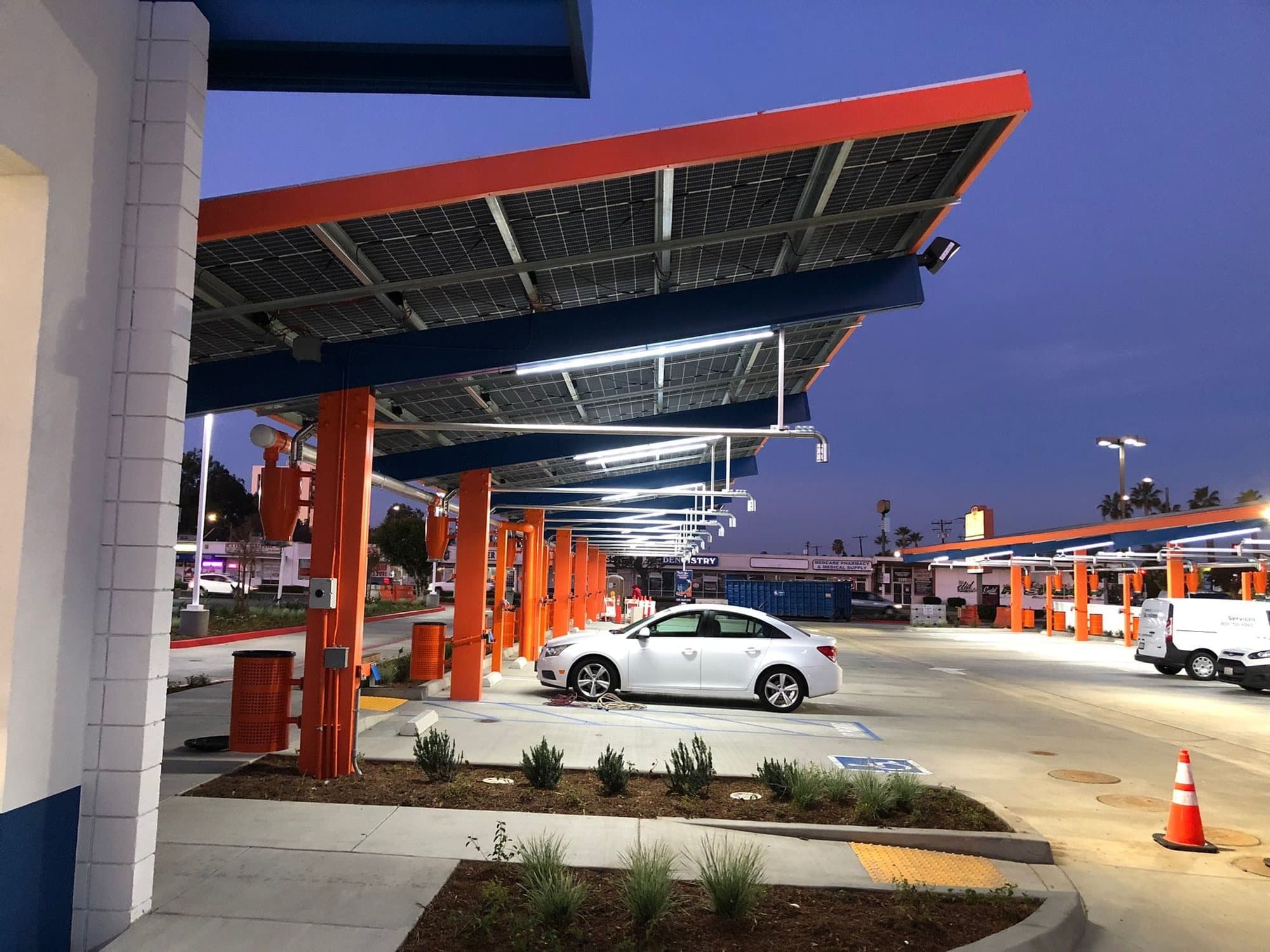
For most of the Supercharger network's history a property owner had one way to get Superchargers: apply to host a Tesla-owned site and wait to be selected. In September 2025 Tesla added a second. Under Supercharger for Business, a business buys Supercharger posts for its own property, hires its own installer to build the site, sets its own prices, and keeps the charging revenue, while Tesla operates and services the equipment. This guide covers how the program works, what the owner is responsible for building, and where a contractor fits.
How the program works
- 01Order. The owner completes Tesla's order form. Tesla's program page lists a minimum purchase of four charging posts.
- 02Install. The owner hires its preferred installer, and a Tesla design engineer is available to guide the project.
- 03Manage. A Tesla portal shows utilization, pricing, and financials, and Tesla handles any equipment servicing.
What Tesla provides
- White-labeled V4 Supercharger posts and cabinets, with the same hardware, software, and pricing controls Tesla uses on its own network.
- Network operations, preventive maintenance, and driver support, backed by what Tesla describes as a 97 percent uptime guarantee.
- A listing on Tesla's in-car map, so Tesla drivers navigating with Trip Planner can be routed to the site, with live stall availability.
- Compatibility with all EVs, according to Tesla, so the site serves more than Tesla drivers.
What the owner builds
Everything outside the posts and cabinets is the owner's project, and on a fast-charging site that is most of the work. A typical scope:
- Utility service application, load letter, and coordination of the transformer location and primary feed across the property.
- Switchgear, metering, and the concrete pads for the transformer and the Supercharger cabinets.
- Trenching or overhead raceway from the cabinets to the posts. Tesla lists cabinet-to-post cable distances of up to 100 meters, which gives the site plan room to keep equipment away from the stalls.
- Post foundations, bollards, wheel stops, striping, and signage.
- Accessible charging spaces designed to the California Building Code's EV charging accessibility requirements, and fire department access.
- Site lighting, and a solar canopy over the stalls when the owner wants shade and generation on the same footprint.
- Building, electrical, and any zoning permits for all of the above.
Sizing the electrical service
Tesla's V4 cabinet delivers up to 1,200 kW of DC power shared across eight posts, and each post can deliver up to 500 kW to a passenger vehicle. Tesla states that the cabinet system typically needs less than 1 MW across eight posts to deliver full power to cars 99 percent of the time. In practice a four- to eight-post site is a utility project measured in hundreds of kilowatts up to about a megawatt, usually with a new transformer, and the utility application is the longest item on the schedule. Start the service conversation before the hardware order is final.
Hosting versus buying
| Host a Tesla-owned site | Supercharger for Business | |
|---|---|---|
| Who buys the hardware | Tesla | The property owner |
| Who builds the site | Tesla and its contractors, with host-side work negotiated | The owner's own installer, guided by a Tesla design engineer |
| Who decides the site goes ahead | Tesla, against its network plan | The owner |
| Who sets pricing and keeps revenue | Tesla | The owner |
| Who operates and services | Tesla | Tesla, on the owner's behalf |
| Branding | Tesla | White-labeled for the owner |
| Minimum size | Set by Tesla per site | Four posts per Tesla's program page |
Incentives
The federal alternative fuel refueling property credit (Section 30C) ended for property placed in service after June 30, 2026. Utility and state programs remain the main support: LADWP's Commercial EV Charger Rebate Program paid up to $125,000 per DC fast charger in disadvantaged communities in its most recent round, subject to its rules on public access and networking, with the next enrollment listed for October 2026, and the California Energy Commission's CALeVIP funds DC fast charging in some regions. Check each program's eligibility rules before the hardware is ordered.
Where GreenSource fits
Tesla's program asks the owner to bring an installer. GreenSource is a licensed California contractor that engineers and builds the owner's side of the site: the utility application, switchgear and pads, trenching and conduit, foundations, accessible stalls, lighting, permits, and a solar canopy over the stalls when the owner wants one. We coordinate the layout with Tesla's design engineer. We do not sell Tesla hardware; the owner orders the posts from Tesla.
Questions
- What is Tesla Supercharger for Business?
- A Tesla program launched in September 2025 that lets a business buy white-labeled Supercharger posts for its own property, hire its own installer, set its own prices, and keep the revenue, while Tesla operates and services the chargers. Sites appear in Tesla's in-car navigation.
- How many Superchargers do I have to buy?
- Tesla's program page lists a minimum purchase of four charging posts. A V4 cabinet is designed to serve up to eight posts.
- Who installs Supercharger for Business posts?
- The owner hires its own installer, and a Tesla design engineer is available to guide the project. The installer builds the electrical service, pads, foundations, conduit, accessible stalls, lighting, and permits.
- Do non-Tesla EVs work at these Superchargers?
- Tesla describes Supercharger for Business posts as compatible with all EVs, so the site serves more than Tesla drivers.
Sources
- Tesla: Supercharger for Business
- Tesla: Host a Supercharger
- LADWP: Commercial EV Charger Rebate Program
Checked against these sources on the date shown above. Codes, incentives, and program terms change; confirm before relying on them.