
Permitting a solar carport in Los Angeles
A solar carport in the City of Los Angeles needs a building permit for the structure, an electrical permit for the PV and chargers, plan check through LADBS, and a utility interconnection with LADWP. What each requires, how long it takes, and how to run them in parallel.
6 min read · Updated October 6, 2026
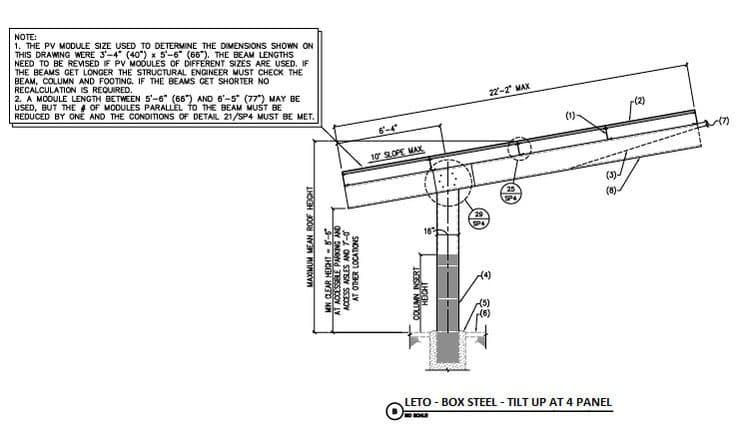
Rooftop solar in Los Angeles has an expedited permit path. A solar carport does not, because it is a structure: foundations, steel, and a roof over parked cars. The permit process is still straightforward when the structural, electrical, zoning, and utility pieces are run in parallel rather than in sequence. Here is how it works in the City of Los Angeles; other Southern California cities follow the same pattern with their own departments.
The permits
- Building permit for the structure. The Los Angeles Department of Building and Safety requires a building permit for the structural support of any solar energy system. For a canopy that covers the foundations, columns, beams, purlins, and the connection of the array to the structure.
- Electrical permit for the PV system, inverters, and any EV charging, with a single-line diagram and equipment specifications.
- Zoning clearance. A canopy must meet setbacks, height limits, parking-space dimensions, and landscaping requirements, and may need a review if the site has a conditional use permit or sits in a specific plan area or a design overlay.
- Fire Department review where the canopy affects fire access lanes or hydrant access.
Plan check
Commercial solar projects in Los Angeles go through plan check, submitted electronically through the city's ePlanLA system. For a canopy the submittal includes the site plan showing the canopy footprint and parking layout, structural drawings and calculations stamped by a California engineer, the foundation design supported by a geotechnical report or justification, the electrical single-line and panel schedules, module and inverter specifications, and the Title 24 compliance documents when the canopy is part of a new building's solar requirement. LADBS defines a carport, for solar purposes, as a structure with a minimum clearance of seven feet and no enclosing walls that shelters vehicles, and requires that all zoning, structural, electrical, and fire requirements be shown in the permitted plans.
Utility interconnection
Within the city the utility is LADWP, which has its own interconnection application, technical review, and inspection before a solar system may operate in parallel with the grid. Systems above certain sizes require a supplemental review and sometimes utility-side upgrades. The interconnection application should be filed when the electrical design is settled, before the building permit is issued, because the utility's review runs for weeks to months and is the usual critical path on a commercial system. If the project adds EV charging that increases the service size, the service upgrade request runs on the same track.
Timeline
| Step | Typical duration | Runs in parallel with |
|---|---|---|
| Site evaluation and layout | 1 to 2 weeks | Geotechnical report |
| Engineering and drawings | 3 to 6 weeks | Utility pre-application |
| Plan check and corrections | 4 to 10 weeks | Interconnection review, rebate pre-approval |
| Utility interconnection review | 6 to 16 weeks | Plan check, procurement |
| Foundations and steel erection | 2 to 6 weeks by lot size | Module and charger delivery |
| PV, electrical, inspections, permission to operate | 3 to 6 weeks |
What keeps a canopy permit moving
- 01A geotechnical report before the structural drawings are finalized, so the foundation design survives plan check unchanged.
- 02A zoning check before engineering starts, so column locations respect setbacks and stall dimensions.
- 03The utility application filed as soon as the single-line is final, not after the building permit.
- 04Rebate pre-approvals filed before equipment is ordered; most programs will not pay for equipment purchased first.
- 05One team holding all four tracks. The usual cause of a late canopy is three consultants on three calendars.
Questions
- Does a solar carport qualify for the expedited solar permit in Los Angeles?
- No. The expedited path is for small rooftop systems. A canopy is a structure and goes through standard plan check, though the structural package for a pre-engineered system is routine for the plan checker.
- Who stamps the drawings?
- A California-licensed civil or structural engineer stamps the structural drawings and calculations, and an electrical engineer stamps the electrical set when the jurisdiction or the project size requires it. Our manufacturing partner's systems come with engineering resources and pre-stamped certified letters that shorten this step.
- How long until the system turns on?
- For a typical commercial lot in Los Angeles, plan to be operating 6 to 9 months after the site evaluation, with the utility interconnection usually setting the pace.
Sources
Checked against these sources on the date shown above. Codes, incentives, and program terms change; confirm before relying on them.