
Solar carports for car dealerships
Why dealerships are among the most natural solar carport sites: large lots, inventory that needs shade, EV inventory that needs charging, high daytime energy use, and a visible brand statement. Layout, charging, and incentives for dealers.
5 min read · Updated October 6, 2026
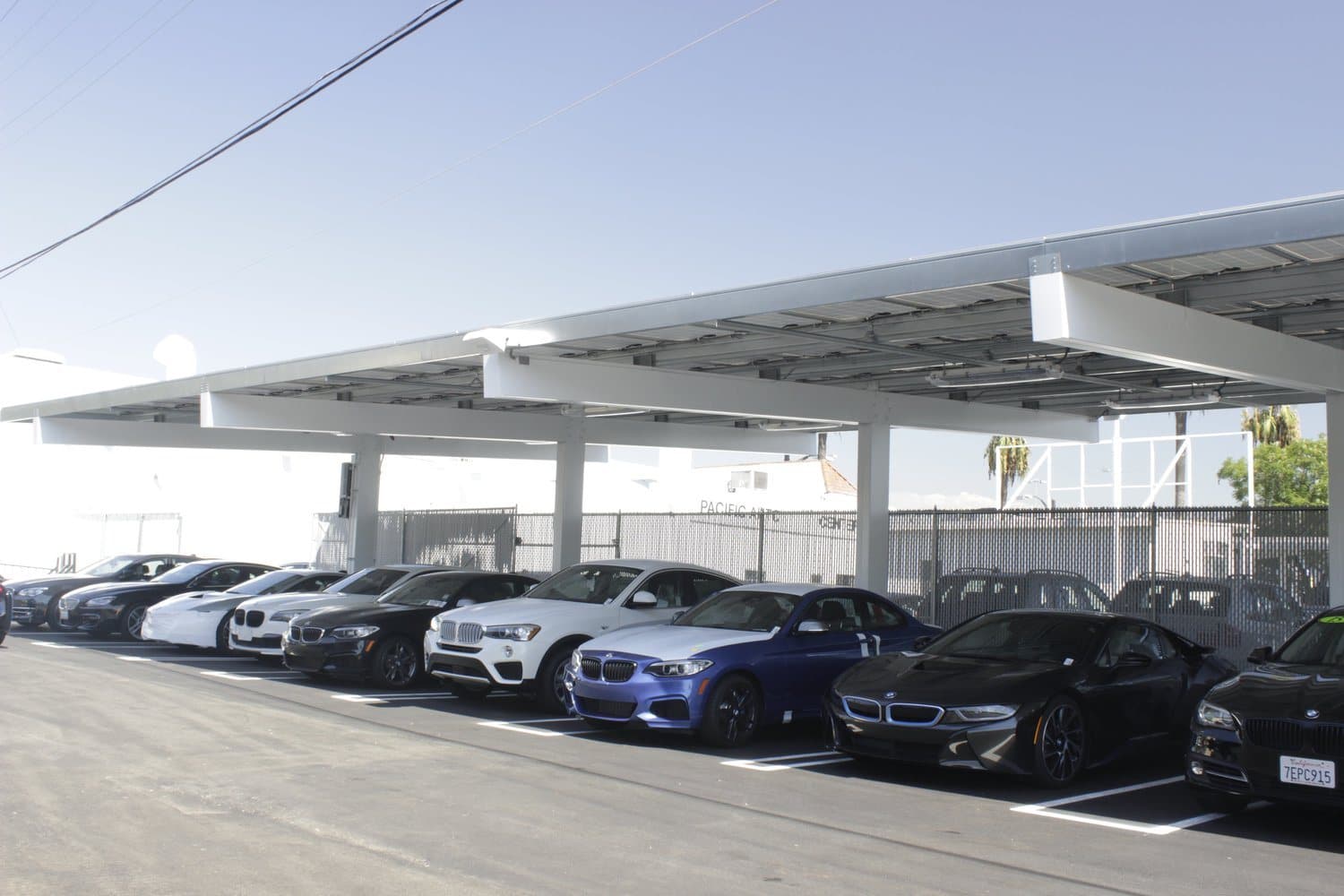
A dealership is a parking lot with a showroom attached, and the parking lot is where the money sits. Several hundred vehicles under the sun, more of them electric every year, and a service department running lifts and compressors all day: it is close to the ideal profile for a solar canopy.
Inventory protection
Shade protects paint, interiors, and tires, and lowers cabin temperatures for customers on a test drive. Dealers in hail-prone markets have bought canopies for decades purely for protection; in California the case is sun and heat, and the energy is the bonus. A canopy also organizes the lot: rows read as rows, and display and inventory areas separate cleanly.
EV inventory charging
Every EV on the lot needs to arrive on the sales floor charged, and demonstrators need to be charged between drives. Dealers that charge inventory from a handful of wall units spend staff time shuffling cars. Chargers at the canopy columns let inventory charge where it parks, and the canopy's daytime generation offsets the load. For dealers selling vehicles with the North American Charging Standard port, the charging layout can be designed for J3400 connectors from day one.
The power bill
Dealership energy use is heavily daytime: showroom lighting and cooling, service bays, car washes, and detail shops. That profile lines up with solar production, so a canopy offsets consumption directly rather than relying on export credits. Demand charges, often a third or more of a dealership's bill, are reduced when the canopy shaves the daytime peak.
Layout for dealers
- TITAN double-row bays over inventory rows, where array per column matters most.
- LETO single-row bays along the street frontage, where the canopy is a display element and the drive aisle must stay open.
- Soft-lit under-sheeting and under-canopy lighting on the front rows, so the lot shows at night.
- Fascia branding on the street-facing rows; the canopy becomes a sign that the city rarely treats as signage.
- Clearance set for the tallest vehicles on the lot, including trucks and service vehicles.
Incentives
Dealerships are commercial sites and qualify for the federal investment tax credit with its December 31, 2027 placed-in-service deadline for projects starting after July 4, 2026, accelerated depreciation, and utility charger rebates where the chargers serve employees or customers. Some manufacturer programs also support dealer charging infrastructure; we coordinate with the dealer's factory representative when a program applies.
Reference
The canopy systems GreenSource delivers are the LETO and TITAN systems installed by our manufacturing partner at dealerships including Pacific BMW in Glendale, where T-cantilever rows cover customer and inventory parking.
Questions
- Will a canopy block the view of inventory from the street?
- Clearance is 8 feet 6 inches or more, so the sightline to the cars stays open. Many dealers find the canopy frames the front row and improves the street presentation.
- Can construction happen while the dealership operates?
- Yes. Rows are phased so inventory moves one row at a time, and foundations and steel for a row take days, not weeks.
- Is the canopy considered a sign?
- Fascia branding is usually reviewed under the sign code; the canopy itself is a structure. We coordinate both with the city during permitting.
Sources
Checked against these sources on the date shown above. Codes, incentives, and program terms change; confirm before relying on them.